

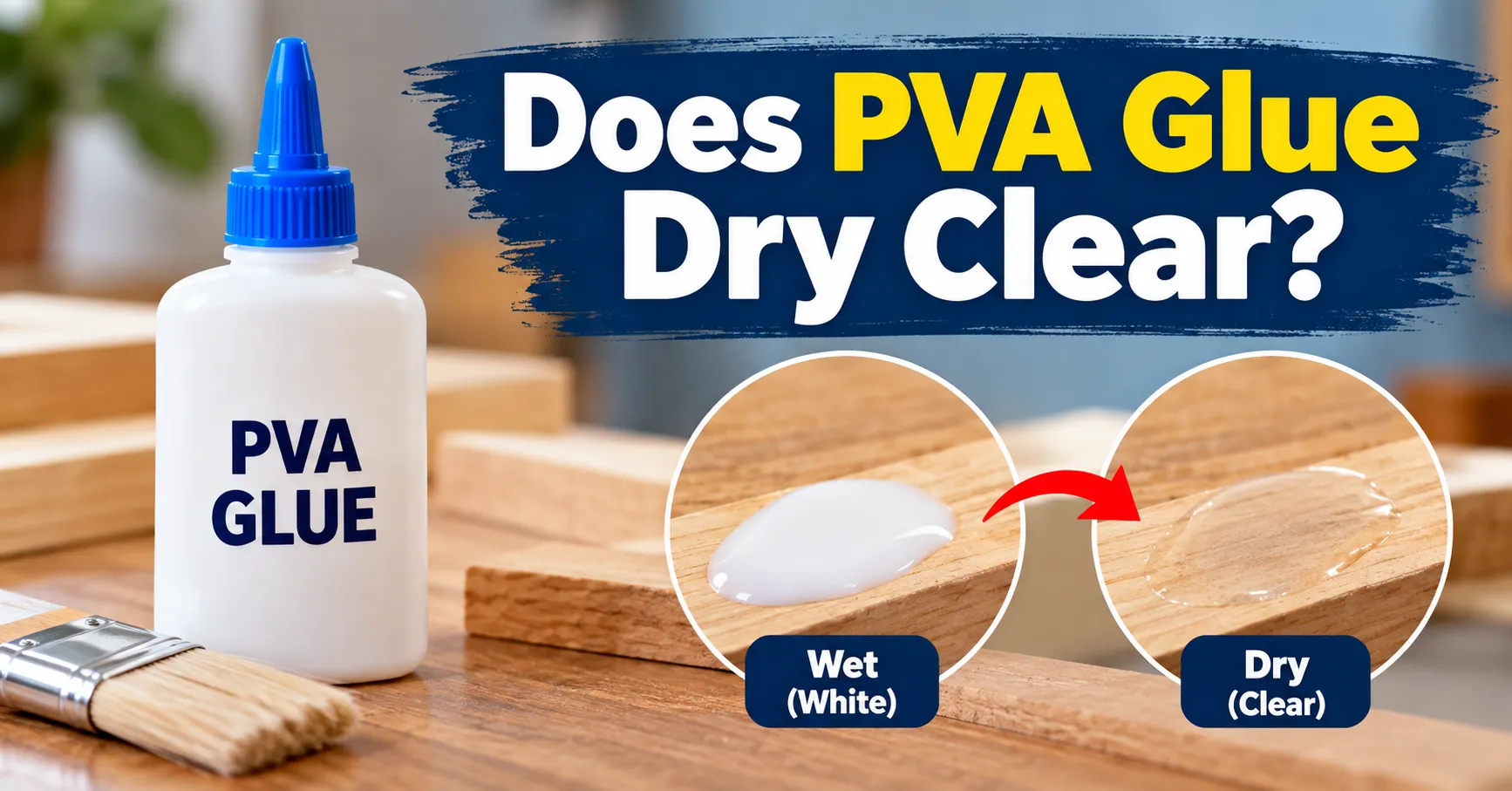
Does PVA glue dry clear? In most cases, yes. Standard PVA goes on milky white and dries to a transparent, slightly glossy film. The result depends on how thickly you spread it, the temperature, and the humidity in your workspace. Get those wrong and you end up with cloudy patches or visible glue lines. This guide explains what happens as PVA dries, how long it takes, and how to get a clean finish on wood, paper, plaster and more. If you also need supplies, browse the full Material Hut shop for adhesives, sealants and decorating essentials delivered across London.
Does PVA Glue Dry Clear? The Short Answer
Yes, PVA glue dries clear when you apply it correctly. Polyvinyl acetate is a water-based adhesive, and the white colour you see in the bottle comes from tiny polymer particles suspended in water. Once the water leaves, those particles fuse into a continuous film that lets light pass through. That is why a bead of wet glue looks opaque and a dried one looks glassy.
Clarity is not guaranteed, though. A thin, even coat dries almost invisible. A thick blob can stay white or cloudy in the middle for hours because the water below the surface has nowhere to go. The surface skins over first and traps moisture underneath.
Different products also behave differently. Craft PVA, wood glue and building PVA all use similar chemistry, but their additives vary. Some contain fillers or plasticisers that leave a slight haze or a faint amber tint. Always test a small area before you commit to a visible joint.
The material you glue matters as well. Porous surfaces such as paper, card and raw timber absorb water quickly and dry clear fast. Non-porous surfaces such as glass or plastic dry slowly because the water can only evaporate from the edges of the joint.
In short, expect a clear finish with thin coats, good airflow and moderate temperatures. The sections below show you how to achieve that every time.
Why PVA Glue Changes From White to Transparent
The Science of Drying
PVA dries through evaporation and absorption. As water leaves the wet glue, the polymer particles move closer together, then merge into a single flexible film. Once that film forms, it scatters far less light, so it looks clear.
What “Clear” Really Means
Dried PVA is usually transparent, not invisible. You may notice a faint gloss or slight tint on close inspection. On light wood or white paper the film blends in. On dark surfaces it can show as a shiny line.
Does Building PVA Behave the Same Way?
Building PVA, used as a primer or bonding agent on plaster and masonry, dries to a clear or slightly translucent film once diluted and applied. It is thinner and more forgiving than craft glue, which helps it dry evenly. You can explore the range in the PVA category at Material Hut.
How Long Does PVA Glue Take to Dry Clear?
Drying happens in stages, and clarity arrives before full strength does. Here is the typical timeline at room temperature:
- Wet stage (0 to 5 minutes): The glue is white and fully workable. Reposition your pieces now.
- Tacky stage (5 to 20 minutes): The colour starts shifting to a milky translucence. The joint begins to grip.
- Clear stage (20 to 60 minutes): Thin layers turn transparent on the surface. Keep clamps or weight in place.
- Handling stage (1 to 2 hours): The bond is firm enough to move gently, but avoid stress.
- Full cure (24 hours): The joint reaches maximum strength and full clarity, even in thicker areas.
Cold, damp rooms can double these times. Warm, dry, ventilated spaces speed them up. Never force-dry PVA with a heat gun, because rapid surface drying traps water and causes cloudiness.
Why Your PVA Glue Dries Cloudy or Yellow
If your glue refuses to clear, one of these causes is usually to blame:
- Layer too thick: Heavy coats trap water and stay white for hours.
- High humidity: Damp air slows evaporation and leaves a hazy film.
- Low temperature: Below about 10°C, PVA can dry poorly and turn chalky.
- Non-porous surfaces: Glass, metal and plastic give water no route to escape.
- Old or diluted glue: Expired or over-watered PVA forms a weak, patchy film.
- Additives in the formula: Some wood and building PVAs contain fillers or stabilisers that leave a slight tint.
- Age and sunlight: Over years, some PVA films yellow gently, especially in direct sun.
A cloudy result does not always mean failure. Often it simply needs more time. Check again after 24 hours before you redo the joint.
Tips for a Crystal-Clear PVA Finish
Apply thin, even coats. A thin film is the single biggest factor in a clear result. Spread it with a brush, spreader or roller rather than squeezing on a bead.
Clean the surface first. Dust, grease and old paint stop the glue bonding and can cause blotchy drying. Wipe the area down and let it dry.
Wipe squeeze-out immediately. Use a damp cloth while the glue is wet. Dried residue is harder to remove and can leave a shiny mark.
Control the environment. Aim for a room around 15 to 25°C with steady airflow and moderate humidity.
Clamp properly. Even pressure squeezes out excess glue and keeps the film thin, which improves both strength and clarity.
Choose the right PVA. Use craft PVA for paper and card, wood PVA for timber joints, and building PVA for plaster and masonry. For gaps and cosmetic repairs, a dedicated product often works better than glue. See the fillers range, such as the 1 Part All Purpose Wood Filler 250 ml.
Using PVA on Building and DIY Projects
Sealing and Priming Plaster
Diluted PVA is a classic primer for new plaster. It seals the surface, reduces suction and helps paint or skim coats go on evenly. The film dries clear or lightly translucent, so it won’t show through your finish. Apply it thinly and let it dry fully before the next coat.
Bonding Agent for Renders and Screeds
Mixed at the right ratio, PVA improves adhesion between old and new surfaces. Follow the manufacturer’s dilution guidance and don’t use it as a waterproofing layer, because standard PVA softens when wet.
When PVA Is Not the Right Choice
PVA is not ideal for wet areas, outdoor joints or flexible gaps. Choose a purpose-made product instead:
- For gaps and joints around baths, sinks and skirting, try sealants or caulk, such as Caulk-Mate One Hour Interior White.
- For heavy-duty bonding, browse the adhesives category or the EVO-STICK Dog Hybrid Sealant & Adhesive White 290ml.
- For flooring jobs, see the Evo-stik Floor Adhesive 5L.
Clean-Up Made Easy
While wet, PVA washes off with warm water. Once dry, you’ll need to scrape it or soften it with warm, damp cloths. Keep the cleaning products and the 6 x Blue centrefeed Roll Paper close by so you can wipe spills straight away.
Conclusion
So, does PVA glue dry clear? Yes, as long as you apply thin coats, work in a moderate, well-ventilated space and give it enough time. Cloudiness almost always comes from thick layers, cold or damp conditions, or non-porous surfaces, and it usually fades within 24 hours. For plaster priming, wood joints and craft work, PVA delivers a clean, near-invisible finish. For wet areas, gaps or heavy loads, pick a specialist adhesive or sealant instead.
Ready to start your project? Explore the Material Hut PVA range, or browse the full shop for adhesives, fillers, sealants and tools. You can also get a quote for trade orders. Delivery is free on qualifying orders over £250 ex VAT.